
Custom Gift Boxes – How to Choose Materials, Structures, and Finishes

The box is handled before the gift itself, so small construction details shape the first impression. A loose insert lets a bottle shift; a lid that catches can make the opening feel clumsy. Buyers get a better result when they settle the structure and inner tray first, then choose the paper and decoration around them.
The box needs to hold each item in place and open without fuss. It also has to fit the order’s storage and shipping limits. The choices below cover the points buyers usually need to resolve before artwork and tooling are signed off.
Kingever Technology has operated since 2001. Company information supplied for this project lists a 20,000-square-meter factory and nearly 200 production and technical staff. The equipment covers printing, hot stamping, lamination, die-cutting, box gluing, gift-box assembly, and lid forming.
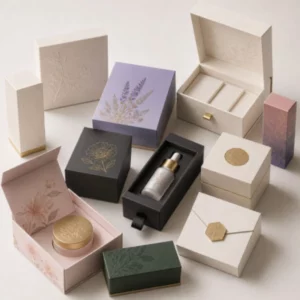
What Makes a Custom Gift Box Work Well?
Product Protection and Internal Support
Lay out the complete set before choosing an insert. A perfume bottle, candle jar, or cosmetic tube can each need a different support, and caps or sleeves change the usable dimensions. EVA, flocked lining, sponge, pearl cotton, blister, and paperboard are options in the supplied product materials. The tray should stop movement but leave the label, shape, or feature the recipient is meant to notice in view.
Opening Experience and Perceived Value
Decide how the recipient should reach the product. A separate lid lifts away; a book-style box opens from one side; a handle changes how the set is carried. On a flip-top, test the hinge and lid clearance with the insert installed. A thick wrap or tight tray can make an otherwise attractive box awkward to open.
Reusability and Storage
Some recipients keep a rigid box for jewelry, tea, or small personal items. That can extend its use, but buyers still need to account for the space it takes in a warehouse and in transit. When the campaign has a large quantity or a short delivery window, compare it with a folding format that ships flat.
Which Custom Gift Box Structure Fits the Product?
Top-and-Bottom Lid Boxes
A separate lid and base give the recipient a simple opening action: lift the cover and the contents are visible. Kingever’s perfume and aromatherapy examples use this form with fitted supports. It can suit a fragrance set or candle collection, provided the base, lid depth, and insert are sized around the actual contents.
Book-Shaped Flip-Top Boxes
A book-shaped box opens like a cover and can keep several items arranged on one panel. The tray may use paperboard, flocked material, sponge, or EVA. Before choosing it for perfume, cosmetics, or a corporate gift set, test the spine and closure with the finished wrap; both affect how the box sits after repeated opening.
Gift Sets With Custom Inner Trays
For a multi-piece set, draw the layout from the items that will actually go in the box. Measure bottles at their widest point and include caps, labels, leaflets, and protective sleeves. A paper or foam divider can stop pieces touching, but it should not force the recipient to tug each item out. Check the filled tray after the box is carried and set down; items that stay aligned on a workbench may shift in transit.
How Should Materials Be Selected?
Rigid Paperboard for Premium Gift Packaging
Rigid board is used when the lid and base need to keep a defined shape. It adds bulk, so match the board and wrap to the box dimensions and the set’s weight. Ask to see the edge and corner finish on a sample; those areas show whether the paper has been wrapped cleanly around the board.
Specialty Paper for Texture and Tactile Appeal
Textured or specialty paper can do much of the visual work without a large printed image. Look at grain direction and color under the light where the gift will be shown. The converter should also test whether that paper wraps around corners without cracking and bonds consistently to the board.
EVA, Flocked, Sponge, and Paperboard Inserts
EVA and flocked inserts suit shaped items that need a close fit. Sponge or pearl cotton can be considered where cushioning matters; a paperboard tray may reduce the number of different materials in the pack. The decision depends on fragility, display, and the waste systems available in the destination market. Verify sourcing statements against current paperwork and the Forest Stewardship Council guidance before printing a claim.
Which Finishes Help a Gift Box Communicate the Brand?
Gold and Metallic Hot Stamping
With hot stamping, a heated plate presses foil onto the chosen surface. Kingever’s supplied process notes stress matching foil to the substrate and the size of the stamped area. Gold and silver are familiar choices; colored, holographic, or transparent foil may also work after testing. Keep the effect focused on an element that needs emphasis. A broad block of foil needs different settings from a small line of type.
Matte, Gloss, and Soft-Touch Lamination
Matte, gloss, and soft-touch films change how the box looks under light and feels in the hand. Compare them on the printed paper, not from a film swatch alone. A gift that will be passed around may need a surface that hides handling marks; a glossy finish can make color stand out but also show fingerprints.
Embossing, Debossing, and UV Details
Embossing and debossing add physical depth, while selective UV can create contrast between a gloss detail and a quieter background. These effects need enough line weight, clear registration, and room around the design. Combining too many small effects can make the surface less readable.
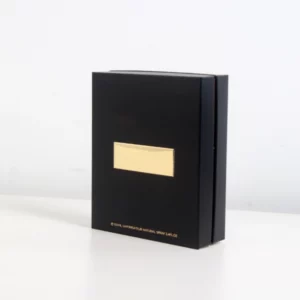
What Should Buyers Check Before Ordering?
Product Fit and Inner Tray Tolerances
Give the supplier the product itself or a dimensionally accurate sample. Check every item with its cap, lid, label, and sleeve in place. If the insert grips too tightly, removing the product becomes difficult; if it leaves too much room, contents can move and hit one another in transit.
Artwork, Color Matching, and Finishing Registration
Review the artwork on the selected paper and at final size. Mark the foil, embossing, and UV areas separately, then check them against folds and glue seams. Kingever’s company materials list Heidelberg and Roland presses, color-management equipment, and automatic finishing lines. Equipment does not remove the need for a signed sample: it is the sample that records the color and registration the batch should match.
Sample Approval and Batch Inspection
Fill the sample, carry it, open it, and close it several times before signing off. Check corners, lid fit, adhesive, insert position, and whether the items can be removed without disturbing the rest of the set. Kingever’s stated workflow puts sample confirmation ahead of scheduling and production inspection. Keep the approved sample where the purchasing and production teams can refer to it.
Keep Decoration and Order Size in View
Each finish adds a production step, and some need a plate or tooling. Decide early which detail carries the design: a foil logo, textured wrap, or printed pattern may be enough on its own. If the brief combines several effects, ask the supplier to make the full stack on the sample so the team can judge appearance and registration together. Quote comparisons only make sense when the quantities, board, insert, finish, packing method, and delivery terms match.
Check How the Boxes Will Be Packed for Freight
Rigid gift boxes occupy space even when empty. Ask for the outer-carton dimensions and the number of finished boxes in each carton before freight is booked. If the set can use a folding format, compare its flat-packed storage requirement with the time and labor needed to assemble it. The right format depends on both the finished presentation and the space available at the warehouse or fulfillment site.
Put the Approval Details in Writing
Record the board and wrap, insert material, artwork revision, foil color, and acceptable placement on the approved sample. Note whether the supplier is expected to match color under a named light source or against a physical reference. That record gives inspection a specific standard to use and helps prevent a later reprint from relying on an email description such as “gold like last time.”
Conclusion
Start with the contents and the way the gift will travel. Once the insert holds the set and the structure opens as intended, choose paper and finishes that fit the product and budget. A sample can settle those questions while there is still time to change the dieline or artwork.
Contact Kingever Technology
For custom gift box structure, insert, material, hot stamping, sampling, and production questions, contact Kingever Technology through the official contact page.
FAQ
What is the difference between a rigid gift box and a folding gift box?
Rigid boxes arrive in a formed shape and give the set a solid presentation. Folding gift boxes travel flat and take less storage space, though they need to be assembled before use.
Which insert is suitable for perfume or aromatherapy products?
Flocked EVA, sponge, paperboard, blister, and pearl cotton can all be suitable depending on the product shape, protection level, and presentation requirements.
Is hot stamping suitable for every gift box?
It is suitable for many paper and board surfaces, but foil, temperature, pressure, area, and artwork detail must be matched to the substrate.
Why should a gift box be sampled before mass production?
Sampling confirms the product fit, opening action, insert position, color, foil, and overall appearance before the full production run.
How to Turn the Brief Into a Production-Ready Gift Box
Match One Real Product Set to the Insert
Place every item in the proposed tray, including caps, sleeves, leaflets, and accessories. Check whether the customer can lift each piece out without pulling on a neighboring item. Kingever’s Perfume Gift Set and Black and Gold Perfume Gift Set show two examples of product-specific presentation; the final dimensions and insert still need to be set for the buyer’s actual products.
Balance Presentation With Shipping and Storage
Ask how the finished box will be packed for transport and how much space it will occupy before use. A rigid box can make sense for a high-value gift set, while a folding format may suit a promotion with a larger quantity or limited storage. Buyers comparing options can review Kingever’s gift box product range and request a sample using the real product configuration.