
Premium Printed Cardboard Packaging with Advanced Processes
Tailored Packaging & Custom Manufacturing
Common base materials include 200g, 250g, 300g, 350g and 400g white cardboard. Surface printing typically involves four-color printing plus spot color printing, with finishing processes such as lamination, varnishing, glitter coating, hot stamping and local UV printing.
As a highly practical packaging type, cardboard boxes stand out for their delicate appearance, stable structure and flexible customization, making them the preferred packaging solution for food, cosmetics, medicine, electronics, gifts and many other industries.
We can provide one-stop services from design and proofing to mass production based on your product features, brand style and packaging requirements. With professional equipment and mature technology, we committe to provide customers with high-quality OEM/ODM customized services to accurately meet the diverse and personalized needs of our clients.
Product Definition
- Color boxes, also known as colored paper boxes or printed paper boxes, are a type of paper packaging.
- They are made primarily of paper, and undergo color printing, surface treatment, die-cutting, and gluing to form the box.
- They combine protective, display, promotional, and portable features.
- Unlike ordinary cardboard boxes, they place greater emphasis on aesthetic appeal and brand presentation.
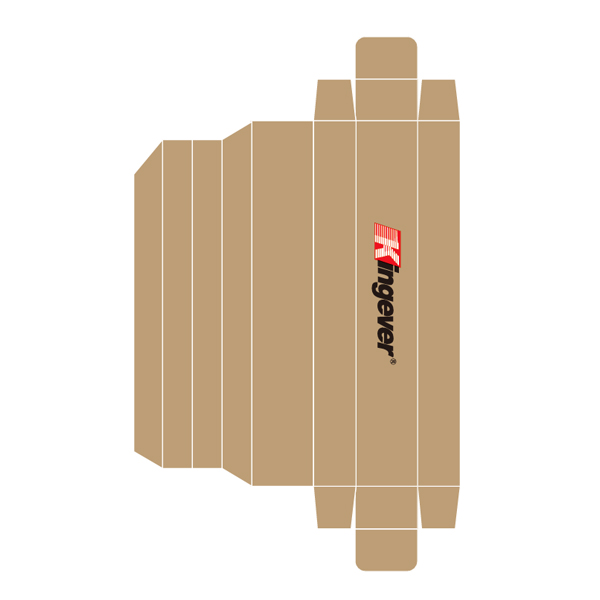
Eyeliner Pencil Packaging Box
Available with custom size, CMYK/Pantone printing, hot stamping, embossing, matte or gloss lamination, and optional window or insert structures.
Send your pencil size, artwork, quantity, and destination country to get a tailored packaging quote.
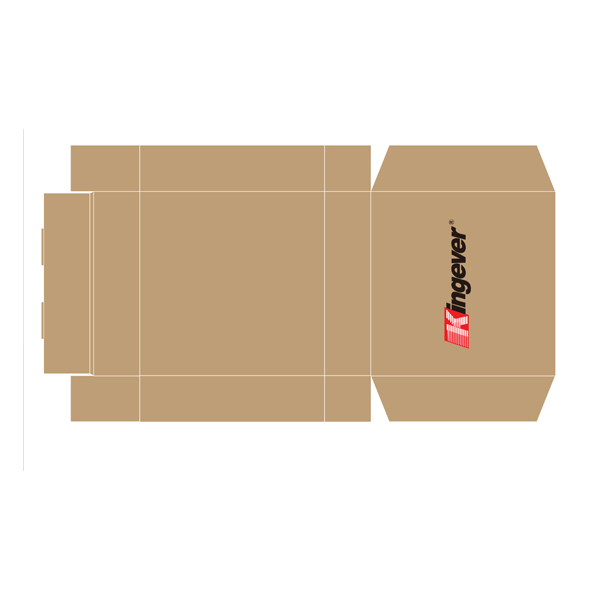
Pizza Flip-Top Box
1. One-piece flip-top structure, easy to open and close, folds without additional gluing.
2. Highly resilient cardboard, strong support, pressure-resistant and collapse-proof, securely holds food.
3. Supports high-definition color printing and lamination, clear patterns, can be printed with brand logos and promotional graphics.
4. Insulated and breathable design reduces moisture buildup, preventing the box from softening and the pizza from getting damp.
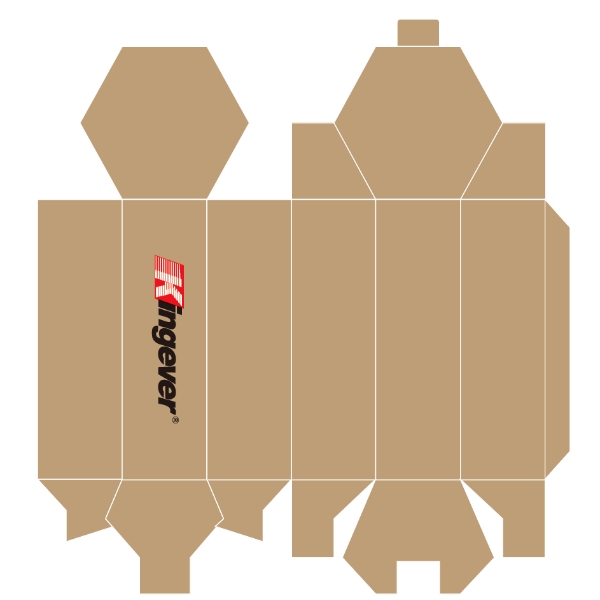
Hexagonal snap-on bottom box
1. Unique hexagonal shape, strong three-dimensional effect, distinctive appearance and high recognizability
2. Snap-on bottom self-locking structure, no glue required, quick and secure assembly, not easy to loosen
3. Excellent paper stiffness, good load-bearing and pressure resistance, not easily deformed or damaged during storage and stacking
4. Compatible with various processes such as color printing, hot stamping, and lamination, providing excellent display effects
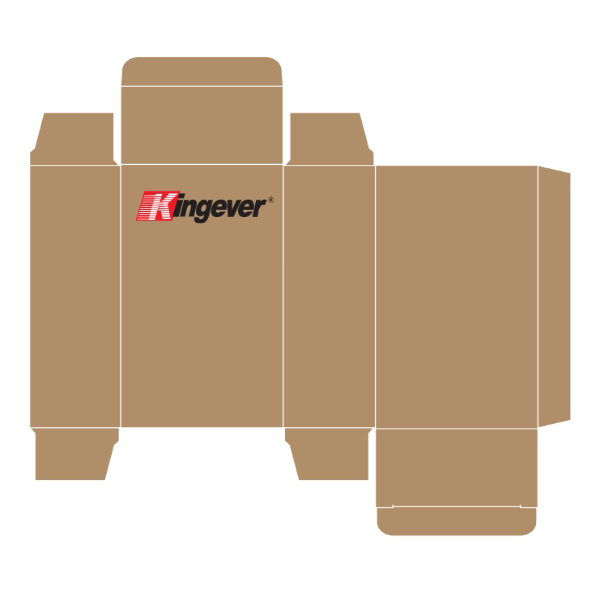
Double-slot boxes
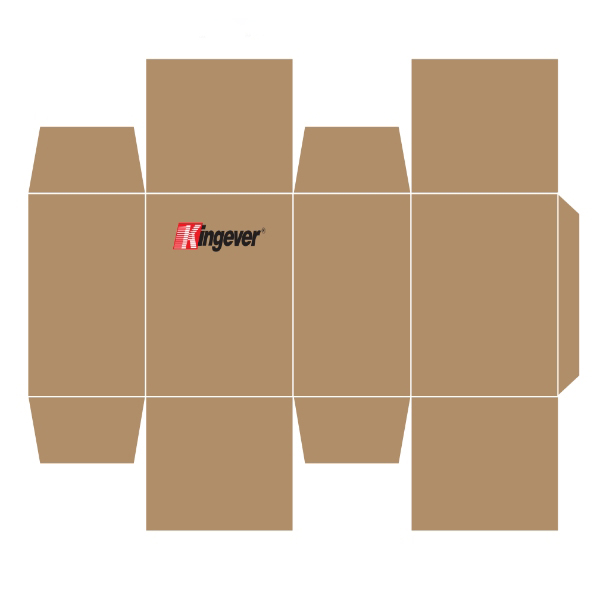
Flat Adhesive Box
Extremely strong load-bearing capacity, no bottom collapse or chipping, suitable for heavy items
Sturdy and regular box shape, high-end finished product
Suitable for fully automated production lines
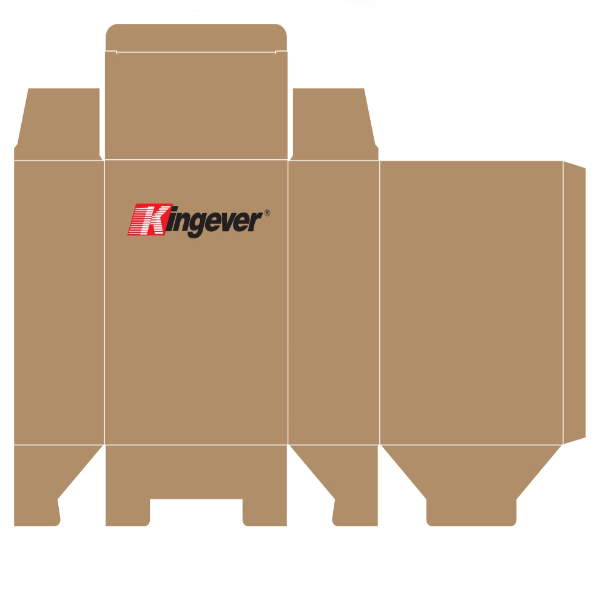
Bottom-lock box
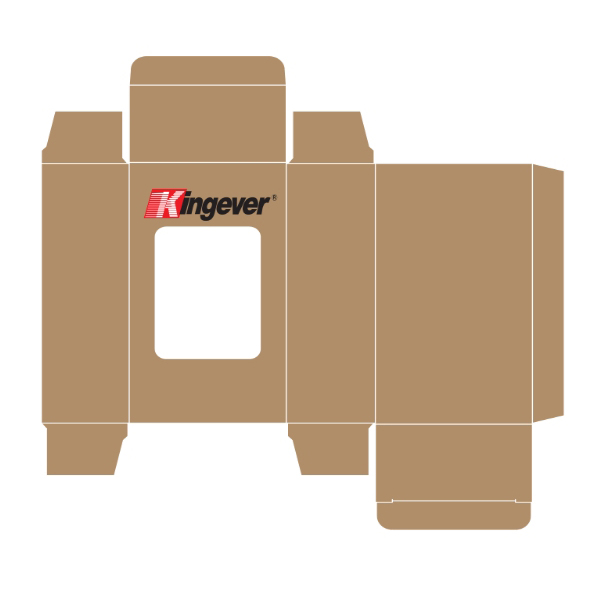
Windowed Box
High-end appearance and good compatibility with printing processes.
Simple structure, easy molding, and versatile design.
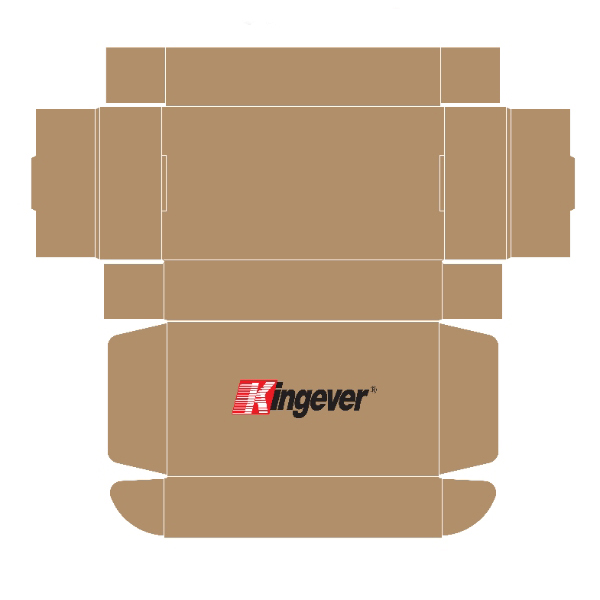
Custom Airplane Box
Pressure and drop resistant, less prone to damage during express delivery
Folds flat, saving space and making inventory preparation convenient
High-quality appearance upon opening, suitable for e-commerce gift box packaging
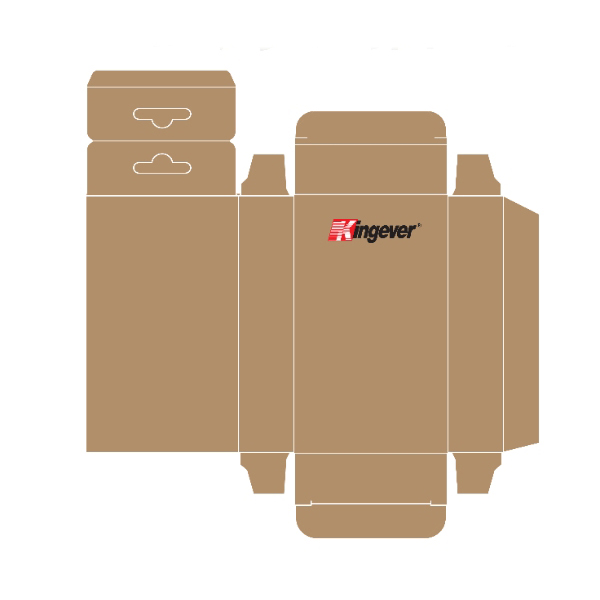
Double Tuck Box with Hang Tab
Aesthetically pleasing display, saves counter space, and improves product presentation.
Sturdy structure, stable load-bearing capacity, suitable for small products.
Can be color printed and laminated, high-end appearance, strong promotional effect.
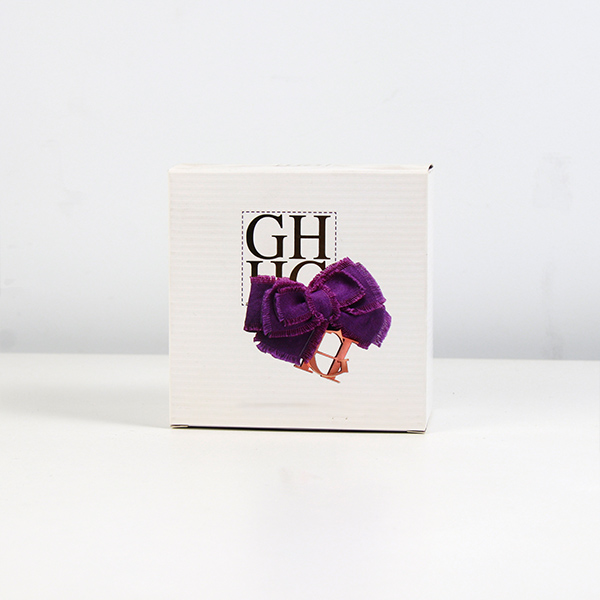
Specialty Paper Card Boxes, Specialty Paper Color Boxes
The Process of Customizing Packaging Boxes

Contact Customer Service

Quotation and Order Placement

Sample Confirmation

Production Scheduling
Production and Manufacturing
Product Inspection
Packing and Warehousing
Settlement and Shipment

Box-Shaped Structure
• Snap-bottom box/slot-top box: Sturdy structure, suitable for heavier products.
• Windowed color box: With a transparent PVC/PET window, allowing for direct product display.
• Machine-packed color box: Suitable for customers packaging in large quantities using fully automated machines.

Printing Process
• Lamination: Glossy lamination (glossy finish), matte lamination (high-end texture), and tactile lamination.
• Hot Stamping (Gold/Silver/Color): Enhances the overall look, suitable for logos and titles.
• UV Coating: Spot gloss, highlighting key designs.
• Embossing/Debossing/Texturing: Creates a three-dimensional tactile feel, enhancing texture.
• Reverse UV Coating, Matte Finish, Ice Flower Finish, Laser Coating: High-end processes, suitable for high-end brand packaging.
• Die-cutting, Box Gluing, Bonding, Crease Finishing: Forming processes ensuring dimensional accuracy.
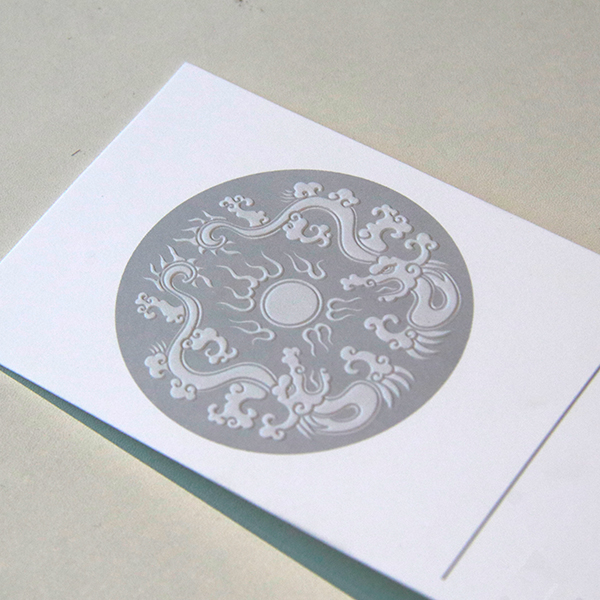
Concave And Convex Seal Script
Materials: None
Equipment: Die-cutting machine
Paper: Xin Ning Cai 270g/m2
Process Characteristics: After offset printing or hot stamping, embossing is applied to the printed material to ensure a complete and seamless integration with other areas of the printed image. Embossing/debossing requires strict technical skills; precise template size and registration are crucial. Different template styles can produce single-layer or multi-layer effects.
Applications: Exquisite book and magazine covers, gift packaging, posters, tote bags, cosmetic boxes, children's books and art supplies, etc.
Precautions: Carefully control printing and embossing errors. The paper should have sufficient toughness to withstand pressure and impact; thickness is also important, as sufficient thickness and toughness are fundamental for achieving a perfect effect.
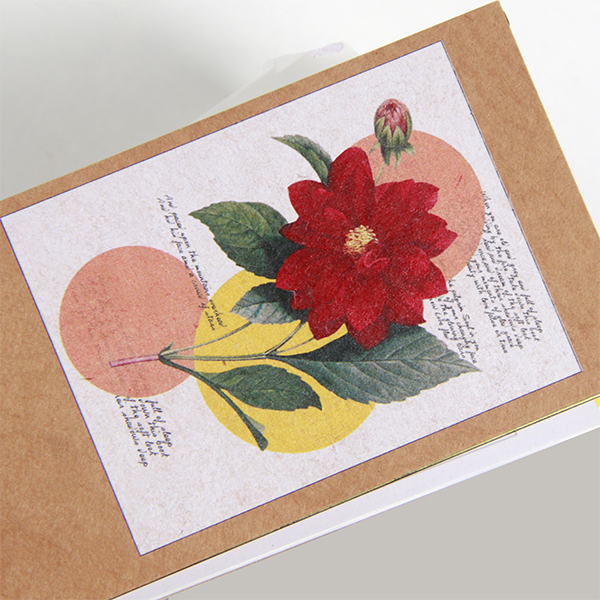
White And Four-Color Printing
Spot color printing: None
Printing Equipment: Offset printing press
Printing Material: 250g/m2 coated paper
Printing and Material Characteristics: Coated paper is a representative of coated paper (also known as C-card, C is an abbreviation for Coated). Using it yields optimal printing performance, resulting in high image and text clarity, vibrant and saturated colors, and high color fidelity. Coated paper has a smooth surface, high whiteness, uniform paper fiber distribution, consistent thickness, low stretching, good elasticity, water resistance, and tensile strength. It absorbs and receives ink very well, making it suitable for all printing methods and enabling most post-press processing.
For color printing, it can also be used primarily for high-end book covers and illustrations, as well as various exquisite product advertisements, samples, product packaging, trademarks, etc.
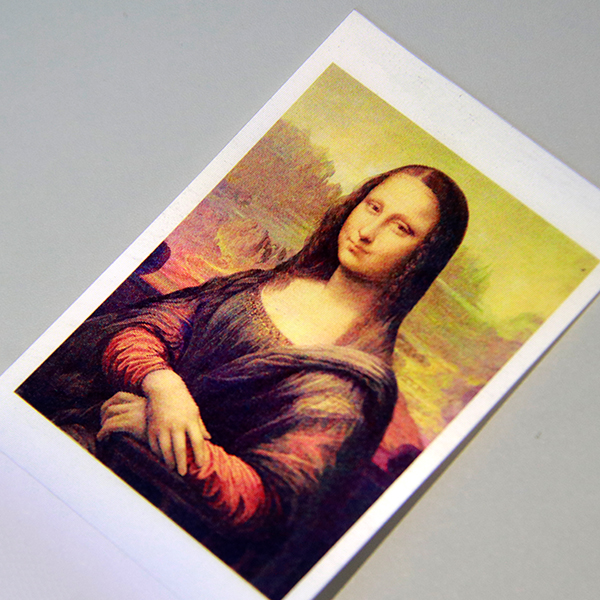
Lenticular Printing
Four-color printing: CMYK
Spot color printing: White
Printing equipment: Offset printing press + UV unit
Printing material: 0.35mm lenticular lens
Printing and material characteristics
Lenticular printing, also known as stereoscopic printing or 3D printing, uses a principle that simulates the spatial difference created by the distance between human eyes. It records pixels at different angles and levels on a photosensitive material, and then, through the composite of lenticular materials, presents a three-dimensional effect on a two-dimensional planar image.
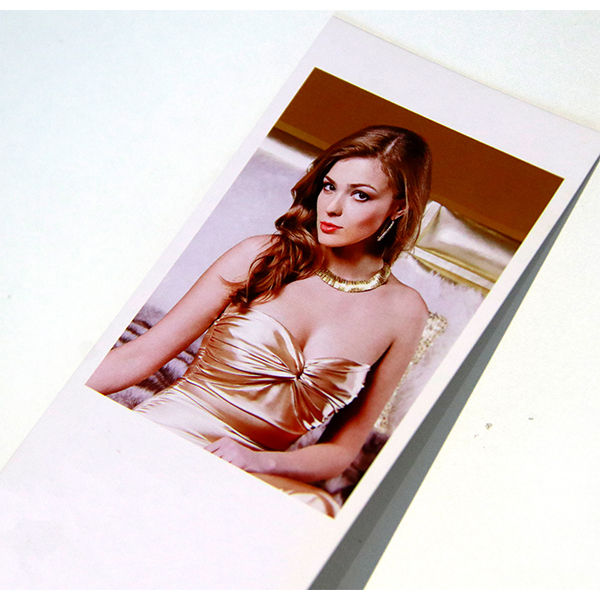
Four-Color Printing
Spot color printing: None
Printing Equipment: Offset printing press
Printing Material: 250g/m2 coated paper
Printing and Material Characteristics: Coated paper is a representative of coated paper (also known as C-card, C is an abbreviation for Coated). Using it yields optimal printing performance, resulting in high image and text clarity, vibrant and saturated colors, and high color fidelity. Coated paper has a smooth surface, high whiteness, uniform paper fiber distribution, consistent thickness, low stretching, good elasticity, water resistance, and tensile strength. It absorbs and receives ink very well, making it suitable for all printing methods and enabling most post-press processing.
For color printing, it can also be used primarily for high-end book covers and illustrations, as well as various exquisite product advertisements, samples, product packaging, trademarks, etc.
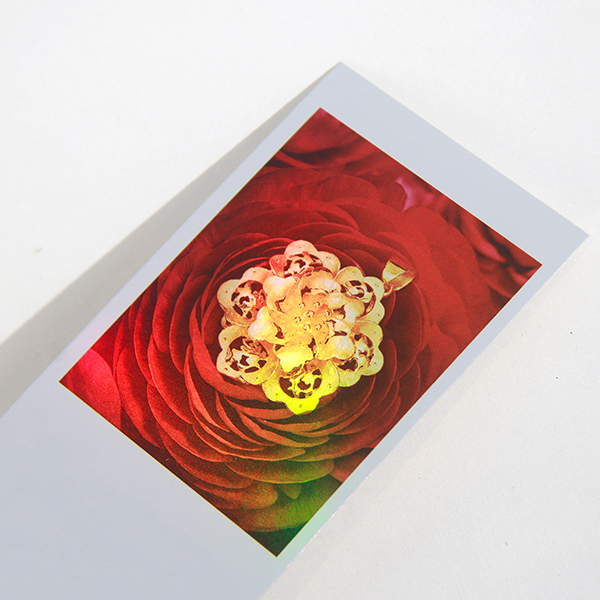
Four-Color Printing And Varnishing
Four-color printing: CMYK
Spot color printing: None
Printing Equipment: Offset printing press + UV unit
Printing Material: Plain laser silver 235g/m2
Printing and Material Characteristics
Laser cardstock is mainly composed of base paper, an aluminum layer, and a coating. The manufacturing principle involves molding laser holographic patterns or text signals onto the surface of aluminized paper.
The color of laser cardstock originates from the surface holographic technology. When white light is incident from a specific direction, different wavelengths of light diffract at different angles, resulting in a continuous rainbow effect.
Precautions
Because silver cardstock has very poor ink absorption and a very smooth surface, many problems may arise, such as ink drying, ink piling, and color changes due to ink overlapping with the silver cardstock's base color.
It is necessary to refer to actual printed samples before deciding to use this material.
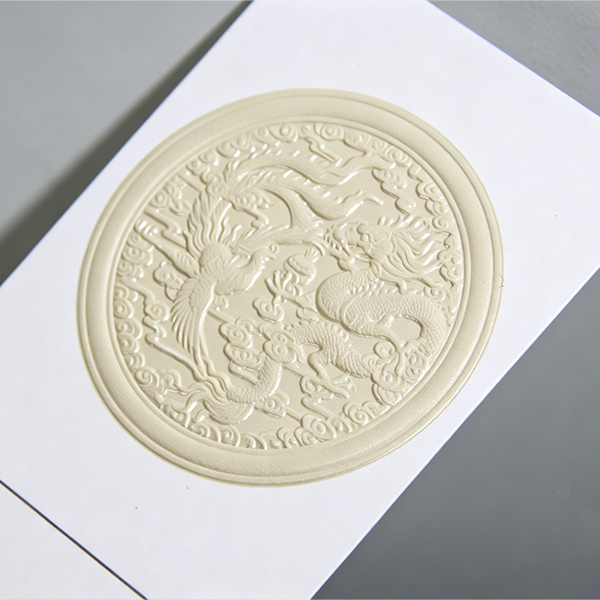
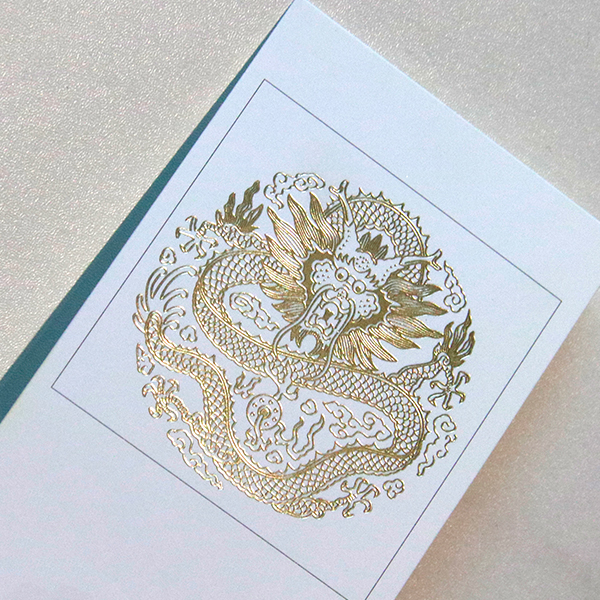
Hot Stamping Embossing
Printing: None
Material: Aluminum foil (H052)
Equipment: Flatbed hot stamping equipment
Paper: Kaimi 235g/m2
Process Features
Utilizing engraving technology, hot stamping and embossing graphics are integrated into a relief model. A single, matching male and female mold completes the hot stamping and embossing process in one step. The resulting product exhibits an embossed pattern effect.
Applications
Packaging boxes, high-end cosmetic packaging, anti-counterfeiting labels, bookbinding, etc.
Precautions
When selecting a substrate for hot stamping embossing, in addition to thickness and toughness requirements, the surface smoothness of the material is crucial. Uneven textures can easily cause pitting, affecting the embossed effect.
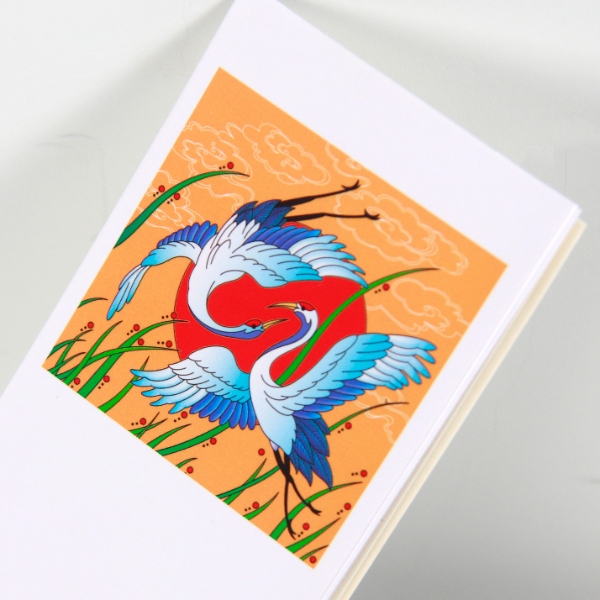
Hot Stamping And Flat Ironing
Printing: None
Material: Aluminum Foil (H050)
Equipment: Flatbed Hot Stamping Equipment
Paper: Kaimi 235g/m2
Process Characteristics: Flatbed hot stamping is the most common and basic hot stamping technique. It leaves white space around the edges to highlight the main subject.
Applications: Flyers, high-end brochures, special printed materials, and various printing and packaging fields.
Precautions: The fonts and lines should not be too small or too thin, otherwise the plate-making accuracy will be difficult to achieve, or the aluminum foil may easily fall off or break during production. If the font strokes are too thick or the gaps between the lines are too narrow, the plate may become blurred.
Lamination - Tactile Film
Printing: Four-color offset printing
Materials: Tactile film
Equipment: Laminating machine
Paper: 250g/m² coated paper
Process Characteristics
Tactile film is a matte film with a special velvety smooth and delicate tactile feel. It has excellent abrasion resistance and superior color saturation.
Colors remain true after lamination, especially on solid black and red areas or large areas of dark color. The tactile film has high haze, resulting in a unique matte effect.
Applications
Posters, maps, tote bags, flyers, books, brochure covers, exquisite calendars, photos, packaging, etc.
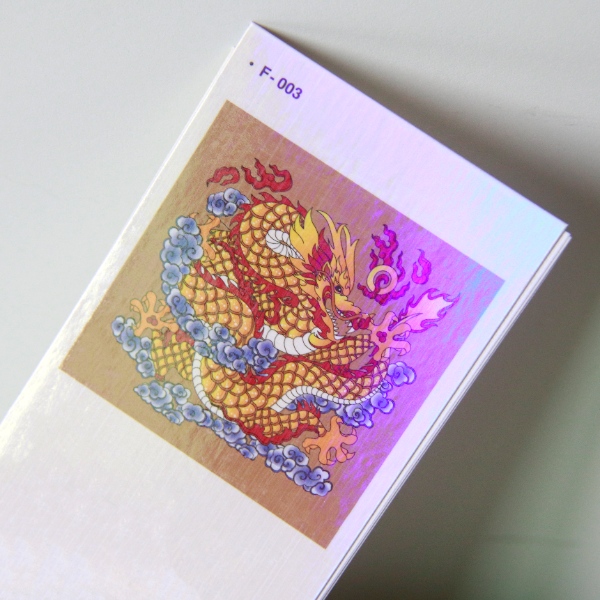
Pearlescent Film Lamination
Materials: Pearlescent film
Equipment: Laminating machine
Paper: 250g/m² coated paper
Process Characteristics: Pearlescent film is a thin film material with excellent barrier properties. It contains a certain amount of calcium carbonate and pearlescent pigments, giving it a pearlescent effect and strong decorative properties. Due to its low price, economic and environmental friendliness, and strong printability, it is widely used in the packaging industry.
Applications: Posters, maps, tote bags, flyers, book and brochure covers, exquisite calendars, photos, packaging, etc.
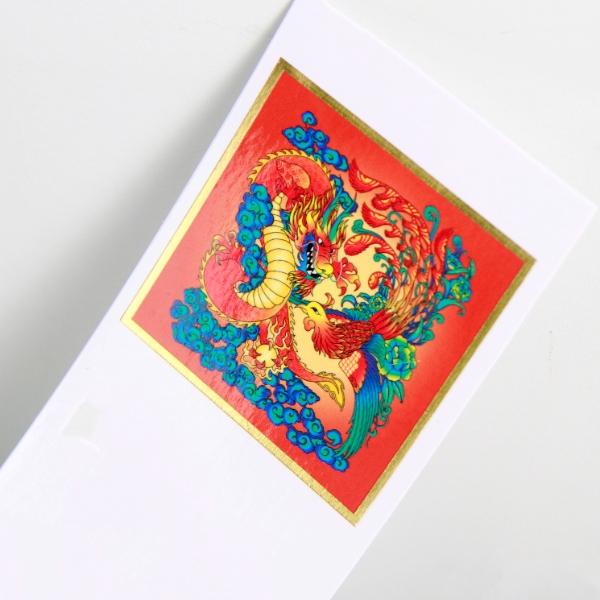
Lamination (Double-sided)
Materials: Aluminum foil + glossy film
Equipment: Laminating machine
Paper: 250g/m² coated paper
Process Features: After lamination, the printed material has a thin, transparent film on its surface, resulting in a more vibrant, brighter appearance and enhanced gloss. The glossy film protects the surface of the printed material, providing waterproofing and stain resistance, while also increasing the expressiveness of the printed material when bending.
Applications: Posters, maps, tote bags, flyers, books, brochure covers, calendars, photographs, packaging, etc.
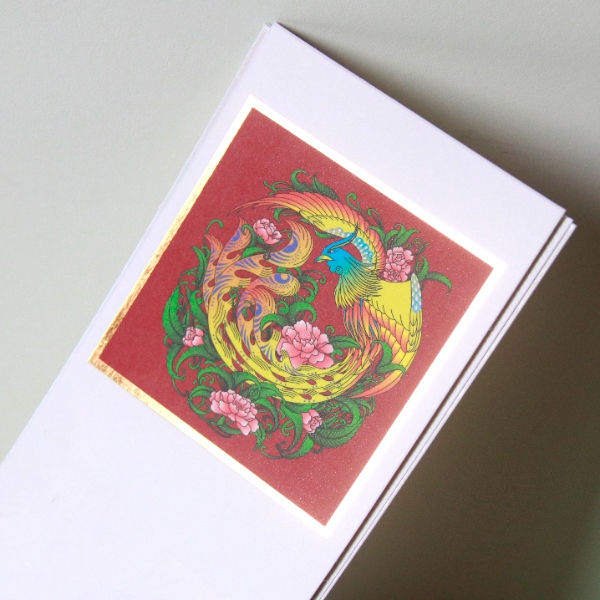
Lamination (Matte Lamination)
Printing: Four-color offset printing
Materials: Matte lamination + aluminum foil
Equipment: Laminating machine
Paper: 250g/m² coated paper
Process Characteristics: Matte lamination is a packaging film. Its surface resembles paper, with a gloss level below 15% and a haze level generally above 70%. It offers a comfortable feel and a serene, elegant appearance. It also enhances the protective function of printed materials and improves the expressiveness of bending and folding techniques.
Applications:
Posters, maps, tote bags, flyers, books, brochure covers, calendars, photographs, packaging, etc.
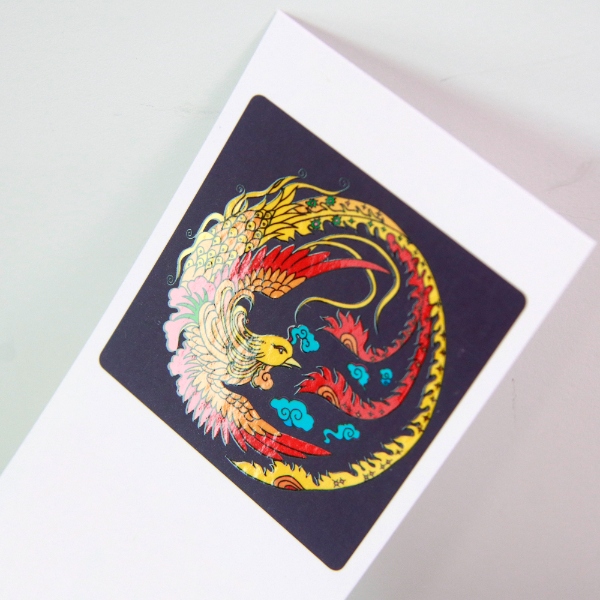
Partial UV Transparent (Bottom Pattern)
Materials: Transparent UV coating
Equipment: Screen printing machine + UV aperture equipment
Paper: 300g/m2 coated paper (double-sided lamination)
Process Features: Within a specific printing area, the localized varnish produces a glossy effect after drying. Its transparent, colorless nature highlights the covered pattern or text, creating a glossy and raised texture. Depending on design requirements, localized UV varnishing and drying are applied to prominent areas, making the graphics and text appear more vibrant, bright, and three-dimensional compared to the surrounding area, producing a unique artistic effect.
Applications: Tobacco and alcohol packaging, daily chemical product packaging, food packaging, hang tags, electronic product packaging, brochures, etc.
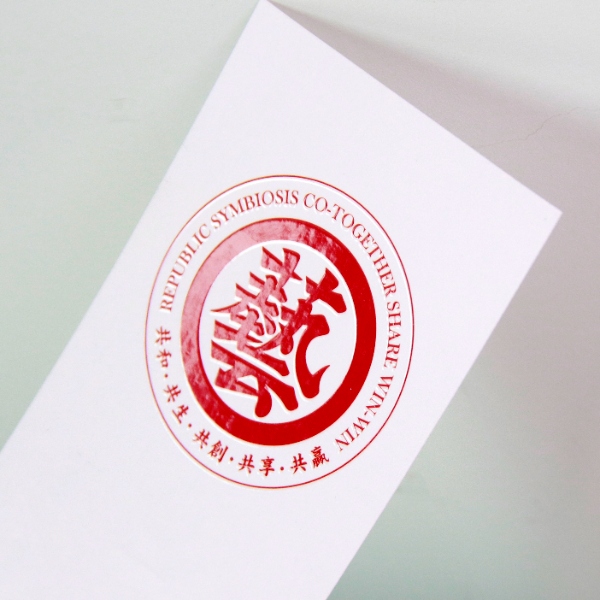
Selective UV Transparent (with base color)
Materials: UV varnish
Equipment: Screen printing machine + UV curing equipment
Paper: 300g/m2 coated paper (double-sided lamination)
Process Characteristics: Selective UV varnishing is a surface decoration process for printed materials. High-gloss, wear-resistant, and transparent UV varnish is used to selectively varnish the printed graphics on specific areas.
Within a specific area of the printed image, the varnish produces a glossy effect after drying, showcasing the covered pattern or text, creating a glossy and raised texture.
Applications: Tobacco and alcohol packaging, daily chemical product packaging, food packaging, hang tags, electronic product packaging, brochures, etc.
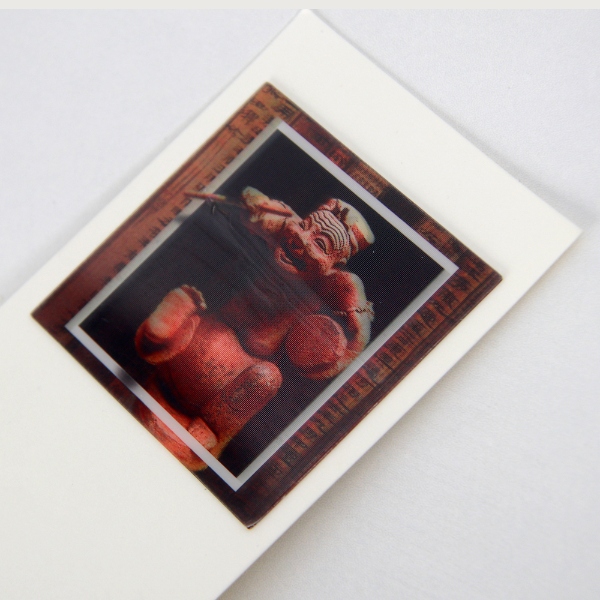
Glasses-free 3D
Materials: 3D lenticular sheets
Equipment: Offset printing press
Paper: 240g/m² Mijian paper
Process Characteristics: Glasses-free 3D technology processes ordinary flat images using computer stereoscopic techniques and special optical materials (lenticular sheets) to create a realistic three-dimensional effect. Due to its novelty and uniqueness, the direct 3D effect is impressive, and many companies use this technology in promotional materials for product introductions and business promotions.
Applications: Packaging, tourist souvenirs, 3D paintings, educational cartoons, postcards, greeting cards, various credit cards, etc.
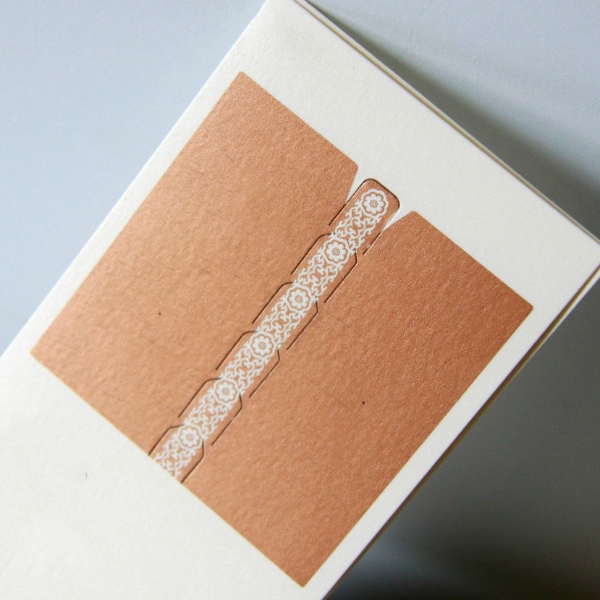
Die-cut Tear-Off Line
Materials: None
Equipment: Die-cutting Machine
Paper: Kate 235g/m2
Process Features: The tear-off line is an interesting way to open items. It's easy to tear along the line, with a well-organized spacing, combining practicality and aesthetic appeal.
Applications: Envelopes, hardcover book boxes, annual reports, holiday cards, invitations, postcards, packaging, etc.
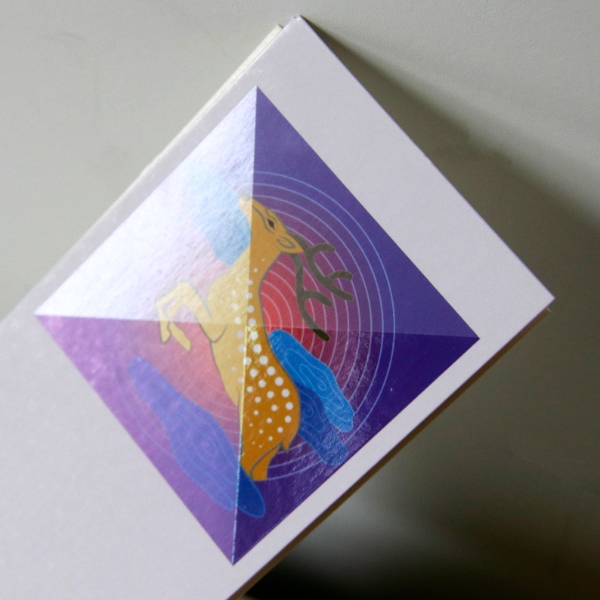
Varnishing
Printing: Four-color offset printing
Materials: Offset varnish and matte varnish,
UV varnish
Equipment: Dedicated varnishing machine
Paper: 250g/m² matte paper
Process Characteristics
Varnishing produces different effects on different types of materials. Varnish, matte varnish, and spot UV coating can be applied to offset printing.
Varnishing improves the abrasion resistance of printed surfaces and protects the graphics and text.
Applications
Book and album covers, packaging boxes, inner pages, greeting cards, wall calendars, desk calendars, real estate brochures, etc.
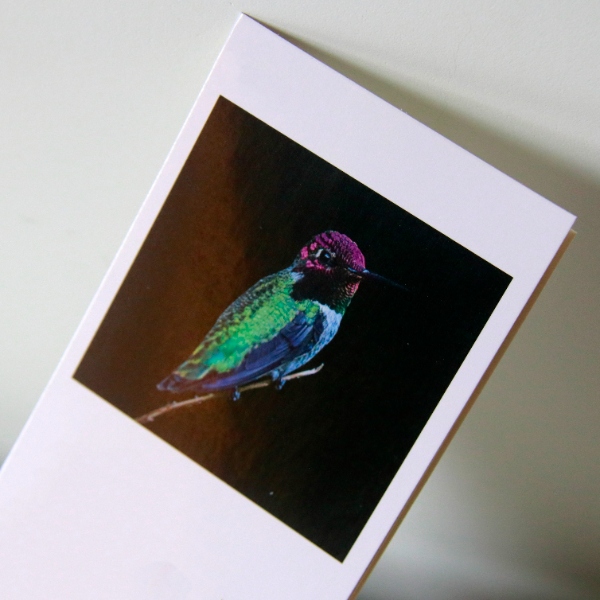
Varnishing & Polishing
Materials: Water-based varnish
Equipment: Dedicated polishing machine
Paper: 250g/m² coated paper
Process Features: A polishing varnish is applied to the printed material, then it is rolled on a smooth stainless steel roller under high temperature using a dedicated polishing machine, resulting in a smooth and glossy effect. The finished printed material has a smooth surface and good gloss. The process is low-cost, environmentally friendly, and suitable for mass production.
Applications: Calendars, postcards, and other flat printed materials requiring a smooth surface effect.
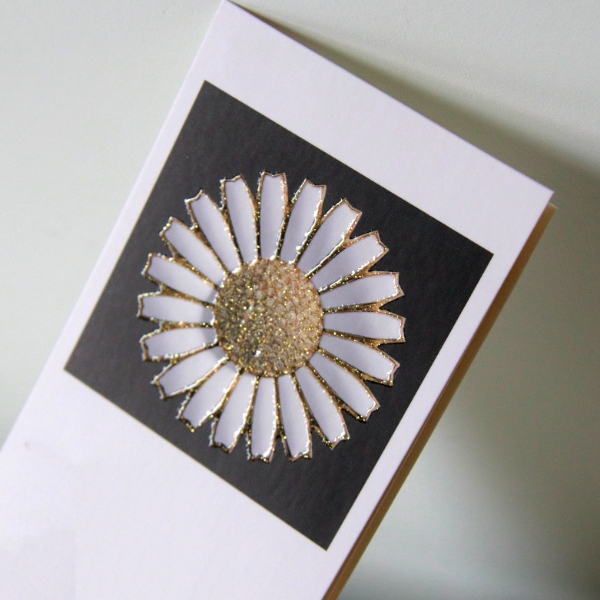
Varnishing with Gell-Glitter Powder
Materials: UV ink, glitter powder
Equipment: Screen printing machine + UV curing equipment
Paper: 300g/m2 coated paper (double-sided lamination)
Process Characteristics: This process combines glitter powder with printing ink (usually UV ink). The glitter powder produces a vibrant array of colors,
enhancing the visual appeal of the product, creating a textured and three-dimensional effect. Its highly shimmering properties also make the decorations bright and eye-catching, adding extra shine.
Applications: Greeting cards, invitations, gift packaging, high-end product gift boxes, Spring Festival couplets, calendars, cigarette packs, color boxes, stationery products, etc.
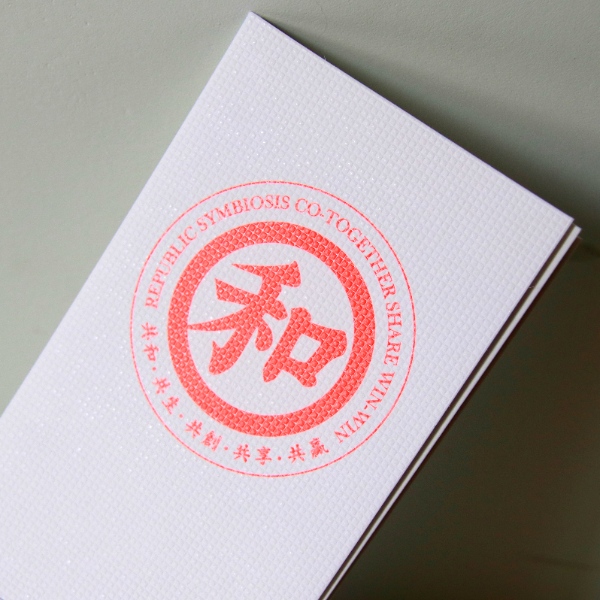
Embossing before printing
Materials: None
Equipment: Embossing machine + metal embossing roller
Paper: 225g/m² (New High-Quality Color)
Process Characteristics: Embossed printed materials exhibit varying shades of artistic texture, creating a distinct three-dimensional relief effect, enhancing the artistic appeal and decorative effect of the printed materials, and elevating the product's quality. Embossing can be done before printing, or printing followed by embossing.
Applications: Packaging outer boxes, product advertisements, book covers, color box face paper, invitations, and embossing of special product surfaces, etc.
Why choose us for custom orders?


-
Q1: What is the structural difference between a Single-Layer Cardboard Color Box and a Corrugated Color Box?
A: Your choice will depend upon the weight of your product, the fragility of your product, and your method of getting your product to your customers.
Single-Layer Cardboard Color Boxes (typical paper weight 250gsm - 400gsm White Cardboard / Ivory Board / Gray Back Duplex): These are non-fluted folding box made from very smooth folding paper, ideal for high end cosmetic, pharmaceutical and lightweight retail gift packaging that will be distributed and sold and not subject to heavy distribution or transportation abuse. They are designed to protect product on store shelves.
Corrugated Color Boxes (Litho-Laminated Boxes): These are top quality corrugated boxes with Litho printed paper face, laminated to the corrugated medium (wavy structural core) be it E-flute, F-flute or even Micro-Flute, They have highest crush resistance & vertical stackability plus good cushioning, these are most widely used in industry for packaging of all sort of electronics, Heavy Counter Displays & also direct to consumer (DTC) e-commerce mailers, which are usually shipped via post. -
Q2: Which corrugated flute profile (E-flute vs. F-flute) should we select for our printed retail color boxes?
A: It’s all about finding the optimal mix between impact protection and a pure and minimal design.
E-Flute (approximately 1.5mm): Ideal for applications that require excellent top-to-bottom compression strength, and very high puncture resistance. These cartons are ideal for heavier items of consumer goods, countertops, free standing displays, and a range of subscription mailer boxes that will be regularly couriered and need to withstand the rigors of continuous handling.
F-Flute / Micro-Flute (approx. 0.8mm thickness): Very dense fluting with small and very close together waves. Creates a smooth / flat outer surface and has a minimum of “washboarding”. Ideal for applications requiring a very light and rigid structure for high definition offset printing such as boutique cosmetics, premium electronics and small gift packs/sets for the luxury market. -
Q3: How does your factory guarantee exact Pantone color replication across large-scale commercial color box runs?
A: We combat color drifting on our multi-color German Heidelberg offset press with our highly integrated Closed-Loop Spectrophotometers. The most critical color (i.e. key color) will be held to a very tight industry leading tolernce of $\Delta E \le 1.5$. For the solid background color of corporate id color, we recommend using the direct PMS Spot Inks rather than using the background color as a separate 4 color process sheet. Using the PMS Spot Inks will give you the identical visual result from the first box to the millionth box. -
Q4: Will the printed colors along the scored folding creases crack or flake when the boxes are assembled?
A: No. Instead, we present a dual-defense approach against ink splitting attacks.
Temperature-Controlled Pre-Creasing: By using computerized heated scoring matrices in our die-cutting we pre-compress and flex the dense paper fibers along the fold lines to achieve the best pre-creased results.
Tensile Film Barriers: As an added premium surface finish to every printed face sheet we supply, we use anti-scratch matte and gloss lamination films. The printed ink matrix is fully protected by this flexible film ‘skin’ allowing Zero Edge Splitting and No Color Leaking through 90 degree folds. -
Q5: Can we combine Matte and Gloss effects on the same color box design?
A: Yes, absolutely. Specialty Drip-Off / Selective Pro-Texture Finishes are our specialty. We apply a specially formulated matte varnish to the background panels of your print using our inline press. The logo, brand name, product artwork, etc. are then over-coated with a high-gloss coating. Upon UV curing, the finish provides a striking contrast between the varnish and gloss and a very rich sand-grain type texture that is very interactive for your customer. -
Q6: Do you offer structural security or anti-counterfeiting print options for high-value retail products?
A: Yes, we can integrate several security measures in your color box production for premium electronics, fine wine and cosmetics, such as Micro-Text Printing (not readable by office scanners), localized Holographic Hot Foil Stamping, variable QR codes / barcodes for real time tracking & tracing of logistics and special packaging with tamper-evident tear strips.