
High-end custom-made plastic bags suitable for various occasions
Tailored Packaging & Custom Manufacturing
We accept customization of all types of Color Boxes, Flower Boxes, and White Card Boxes. Cardboard boxes are really popular in the packaging industry. They are made from cardboard and are very sturdy so they do not bend or break easily. The surface is smooth and clean which makes the colors look really good. Sizes can be customized, providing dust protection and product safeguarding while combining attractive appearance and practicality.
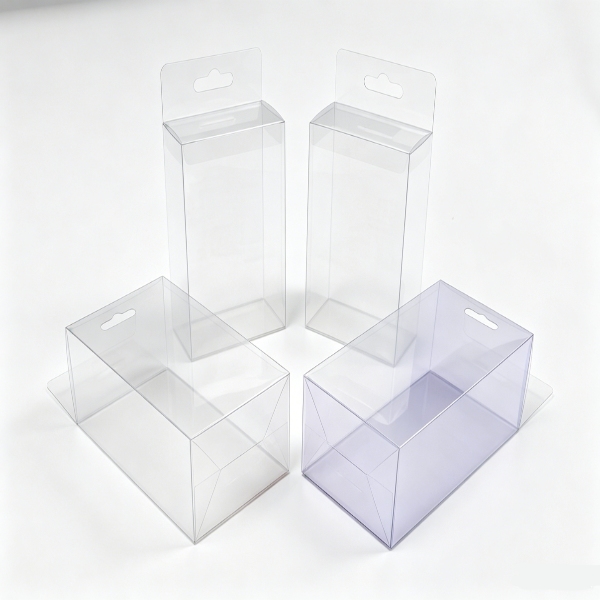
Transparent PVC/PET Box
Full transparent display, product protection, easy assembly, printable surface;
Jewelry, cosmetics, small electronics, gifts, hardware, stationery;
Custom sizes, artwork support, samples, wholesale orders, quotation available.
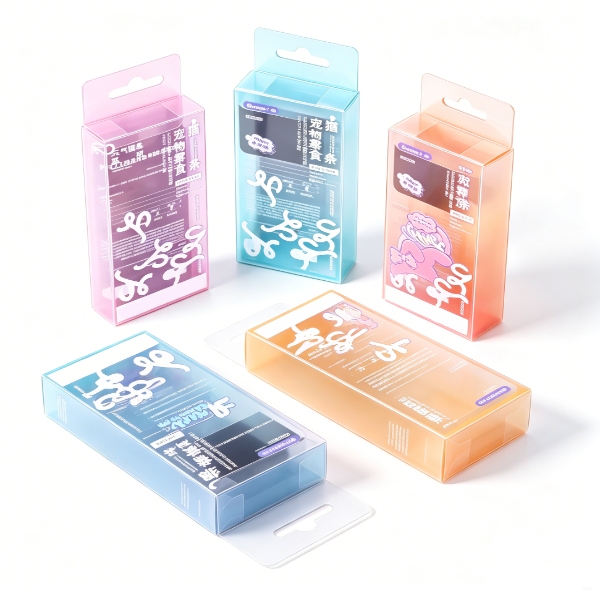
PVC/PET Box with Hang Tab
Note: Low surface energy (29–31 dynes), corona/flame treatment is required before offset printing, otherwise the ink will peel off.
Applications: Food packaging boxes, transparent folders, frosted cards, folding boxes.
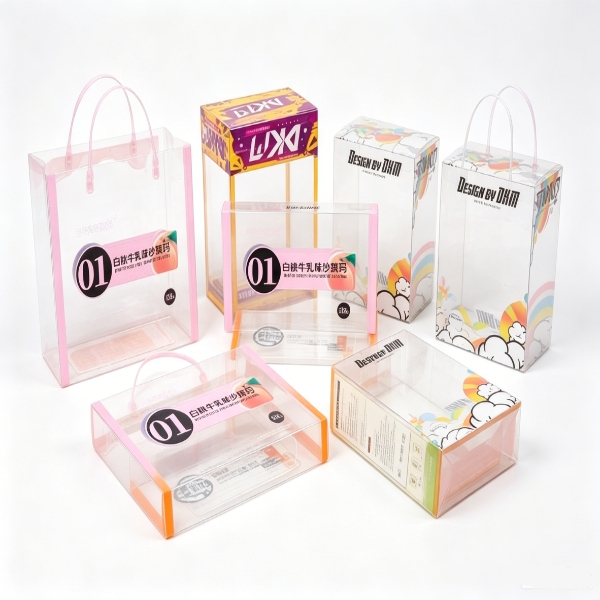
Custom Colored PVC/PET Box
Comparison with PET: Tougher and less prone to cracking than PET; more environmentally friendly than PVC.
Applications: High-end transparent boxes, food/pharmaceutical packaging, ID cards, hot stamping/holographic cards.
The Process of Customizing Packaging Boxes

Contact Customer Service

Quotation and Order Placement

Sample Confirmation

Production Scheduling
Production and Manufacturing
Product Inspection
Packing and Warehousing
Settlement and Shipment
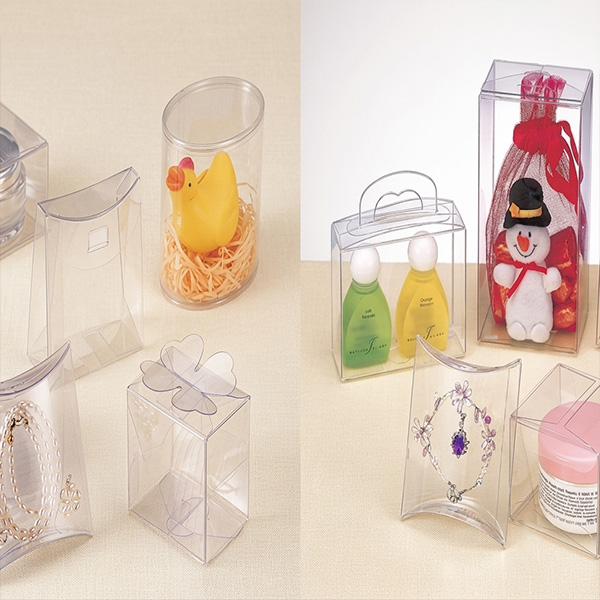
Softening Thread (SK Thread)
Visually:
The crease is a thin, transparent concave line.
No white edges or cracks.
Folds smoothly and effortlessly.
It is not easily broken even after dozens of folds.

What exactly is Softening Thread (SK Thread / Electric Pressing)?
Common Names: Soft Thread, SK Thread, Electric Pressing Thread, Hot Pressing Thread
Uses: Specifically for the folding area of transparent plastic boxes, ensuring the crease is soft, does not whiten, does not break even after repeated folding, and automatically springs back.
Principle (Simplified Version): Ordinary Pressing Machine: Cold pressing, hard pressing → Molecules at the crease are "cracked" → Easily whitens, easily breaks, difficult to fold. Softening Thread (Electric Pressing): High frequency + slight heat + pressure → Plastic molecules at the crease rearrange and soften locally → Forming a thin, soft, and flexible crease that is not easily broken even after repeated folding.
Effect Comparison
1.Standard Indentation: Thick thread, whitish, stiff, prone to cracking with repeated folds, box collapses.
2.Soft Thread:Thin thread, doesn't whitish, soft yet firm, doesn't break even with repeated folds, box remains square after folding.
Material and Application:
PVC:Most suitable, can be indented and cut.
APET/PETG:Mainstream for transparent boxes, can only be indented, cannot be cut.
PP:Suitable for food-grade soft boxes.
Ordinary Paper/Rigid Cardboard:** Not used with this process.
Thickness:0.15–0.6mm, most common with plastic sheets.
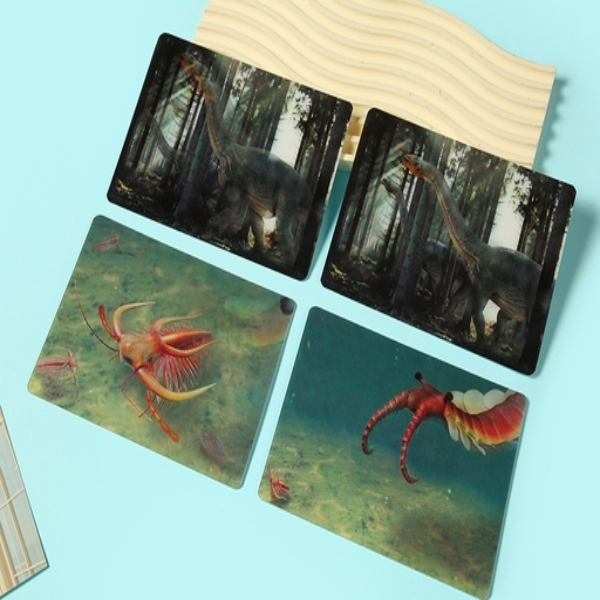
Lenticular printing or 3D printing
Common Effects:
3D Stereoscopic (Embossing): Foreground jumps out, background sinks in, strong depth.
Lenticular Printing 3D Stereoscopic Effect
Image Changing (Flip): Two images are flipped together, changing with a flip (e.g., "front/back," "day/night").
Lenticular Printing Image Changing Effect
Animation (Motion): Multiple consecutive images moving like a short video (e.g., blinking, running).
Lenticular Printing Animation Effect
Scaling/Explosion/Rotation: Strong visual impact, often used for anti-counterfeiting.

Material parameters and process flow
Lenticular Sheet: PVC, PET, PP; Thickness 0.15–0.6mm (0.3mm is commonly used for cards).
Lines Per Inch (LPI): Number of cylinder lines per inch
60–75 LPI: Posters, large packaging boxes (viewed from a distance)
100–150 LPI: Cards, hang tags, stationery (viewed up close, high definition)
Printing Methods:
UV Offset/Screen Printing: Large batch, high precision
UV Inkjet: Proofing, small batch, variable data.
Process Flow
1. Design and Subdivision: Prepare 2–N images (angle/motion continuity).
2. Software Interlace: Cut into thin strips according to the lenticular line count and combine them into an "interlace image".
3. Printing: Precisely register the image on the **back side (smooth surface)** of the lenticular lens.
4. Die-cutting/Creasing: Make cards, boxes, stickers; creasing uses the "soft thread/hot stamping" you mentioned earlier, ensuring no whitening or breakage at the folds.
5. Finished Product: No lamination required; the surface has a built-in lenticular protective layer.

Advantages and application scenarios
Regular Printing: Flat, static, no angle variation.
Lens Printing: Naked-eye 3D/image changing/animation, strong visual impact, difficult to replicate (anti-counterfeiting), higher unit price.
Application Scenarios
Packaging: Cosmetic boxes, electronic product boxes, gift boxes for cigarettes and alcohol (high-end feel).
Lens Printed Packaging Boxes
Cards: Membership cards, VIP cards, anime cards, anti-counterfeiting labels.
Lens Printed Cards
Cultural and Creative Products: Postcards, bookmarks, magnets, mouse pads.
Advertising: Posters, banners, display boards, promotional fans.
1. Extremely high registration precision: Even a 1mm misalignment will result in ghosting; professional equipment and a cleanroom are required.
2. Angle limitations: Optimal results are achieved within a range of **±15°–30°**; further deviation will result in blurring.
3. Creasing must use soft thread (hot stamping): Ordinary cold pressing will crack, whiten, and render the lenticular lens unusable.
4. Cost: 3–10 times more expensive than regular printing (depending on line count, effect, and quantity).
Lens printing = interlaced image printed on the back + lenticular lens lenticular on the front = naked-eye 3D / image transformation / animation, ideal for high-end cards, gift boxes, and anti-counterfeiting labels; embossing must be done with "thermal heat transfer thread," otherwise the folds will inevitably crack.
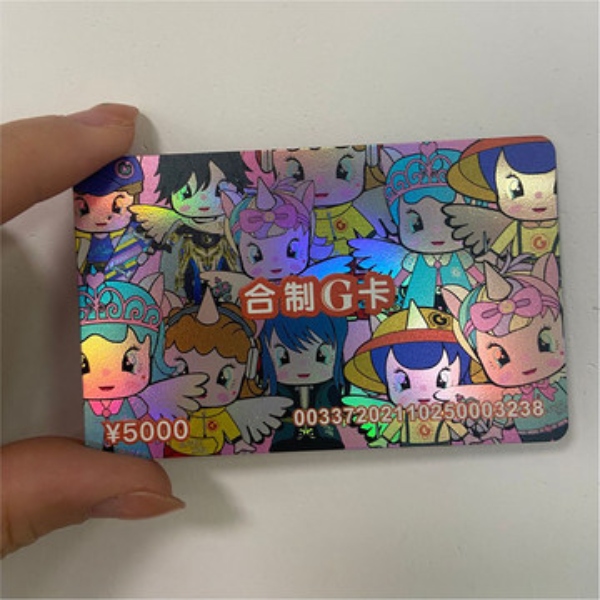
Transparent PETG + Laser/Hydroscopic
Process: Offset printing + Laser/Holographic (color changes with light)
Effect: Displays a rainbow of colors depending on the angle, suitable for creative and trendy designs.

Glossy PVC + Hot Stamping
Material: White/Black PVC (0.76mm standard card thickness)
Process: Offset printing base color + hot stamping (logo, text)
Effect: Metallic luster, slightly raised texture, wear-resistant, high-end feel
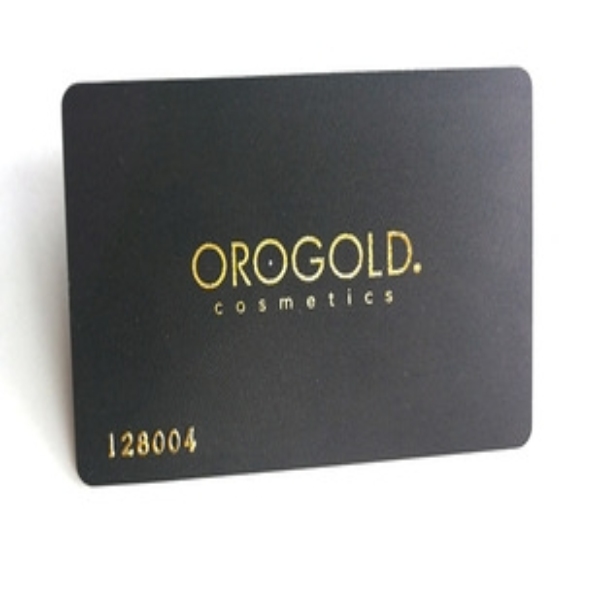
PVC Matte/Frosted + Embossed/Debossed
Material: Matte PVC (Black/Dark Gray are most common)
Process: Embossing/Debossing (LOGO, Pattern) + Hot Stamping Available
Effect: Delicate matte feel + 3D embossing, understated yet sophisticated
Complete Manufacturing Process for Plastic Cards (PVC/PET/PETG/PP)
Standard Card Thickness: 0.38mm, 0.76mm (National Standard Bank Card Thickness), 1.0mm


Basic Printing Process (Main Body Coloring, Offset Printing as the Mainstay)
1. Offset four-color/spot color printing is the mainstream process, using a Heidelberg offset printing press, with layered printing on both sides; PVC/PETG does not require complex corona treatment, while PP must undergo corona treatment to prevent ink fading; solid black, spot red, and brand spot colors are used.
2. Screen printing uses large areas of solid color, white ink base, thick UV ink, and partial matte ink; screen printing is essential for white ink masking on the back of transparent cards.
3. UV digital printing is preferred for small batches, personalized card numbers, and variable QR codes, ideal for short orders.
Hot Stamping (Most Commonly Used High-End Processes)
1. Gold/Silver/Laser Gold Stamping: Logo and lettering stamped in metallic colors, flat stamping.
2. Seven-Color Laser Stamping, Holographic Stamping: Reflective color-changing, anti-counterfeiting cultural and creative cards.
3. Color Foil Stamping (Red/Blue/Green): Colorful metallic effect.
Embossing/Debossing Processes
1. Embossing (Relief): Logo embossed on paper/plastic, ink-free, tactile three-dimensional feel (popular process for matte black cards).
2. Debossing: Depressed lettering.
3. Integrated Embossing and Debossing: First embossed, then gold stamped, three-dimensional gold edge, highest grade.
Card Number Data Processing
1. Embossing (Large Embossing): Raised numbers like those on bank cards, can be hot-stamped in gold or silver;
2. Flat Inkjet Printing: UV variable inkjet printing of small black numbers, invisible code;
3. Hot Stamping: Batch numbering hot stamping.
Special Anti-counterfeiting & Special Effects Processes
1. Hollow-out: Round holes and irregular hollow-out designs on cards, commonly used for transparent cards;
2. Flocking: Soft, velvety surface, used for high-end gift cards;
3. Fluorescent Ink: Glows under UV light, anti-counterfeiting;
4. Thermochromic Ink: Changes color with touch, temperature-controlled cards;
5. Partial Matte Screen Printing: Partial matte finish, partial glossy contrasting colors.
Molding and Matching
1. Laminated Board: High-temperature hot-pressing lamination of multiple PVC sheets (multi-layer composite cards);
2. Die-cutting: Die-cutting a large sheet of material into standard 85.5×54mm cards;
3. Rounded Corners: R3 rounded corners on all four sides, anti-cutting (standard on most cards).
Material and Process Comparison Summary
1.PVC: Versatile and compatible with all processes, offering the best value for money.
2.PETG: High transparency and environmentally friendly, suitable for transparent hot stamping and laser cards.
3.PP: Food-grade, only suitable for offset printing and screen printing, difficult to hot stamp.
4.PET: Transparent window cards, semi-transparent frosted cards.
-
Q1: What is the primary difference between PET and PVC materials for clear folding boxes, and which one is globally preferred?
A: When choosing between PET and PVC for packaging, factors such as the environmental legislation of the target market, the type of product being packaged, and the budget available are very important.
We Offer: Eco-friendly PET (Polyethylene Terephthalate) – 100% Non-toxic / 100% Recyclable. Maximum optical clarity, Premium Gloss finish, High impact resistance. Most in demand packaging material. Fully compliant for food contact, supplements, baby toys, and high end cosmetics packaging. North America, EU (PPWR), and UK markets served.
PVC (Polyvinyl Chloride): Cost efficient material. Very flexible and scratch resistant. PVC is a strong candidate for folding applications such as hardware, electronic cables, stationery and non-food general products offered by retail stores. Restrictions on imports of PVC or extra eco-contributions for this type of consumer products may be in place in certain EU countries, therefore they are not recommended for modern sustainable brands, such as PET. -
Q2: Do you offer recycled eco-friendly plastic options for brands pushing zero-waste mandates?
A: Yes, absolutely. We offer RPET (Recycled PET) packaging options with certified post-consumer recycled content ranging from 30% to 100%. Our RPET resin blends match the structural rigidity of our virgin plastic boards and maintain excellent optical clarity so your brand can meet the strictest circular economy requirements (UK Plastic Packaging Tax & European Green Deal etc) whilst maintaining clear product visualization. -
Q3: Why are some clear plastic boxes difficult for assembly staff to fold, and how does your factory solve this?
A: Tough, set-in folds can hinder the speed of your packing lines and also lead to corner cracking. We use Advanced Soft-Crease RF (Radio Frequency) Technology to overcome these problems. Our die-cutting machines are fitted with automated pressers and are equipped with precision RF-heat-waves that are focused on the fold lines of the presser to alter the molecular structure of the polymer matrix. The resulting Soft Creases are all of an even depth and are very fine, allowing the material to fold very easily at a 90° angle without any resistance. The benefits to you of these special folds is that they can increase your speeds in both manual and automated assembly lines by up to 50% and also prevent whitening and splitting at the edges of the folds. -
Q4: How do you prevent clear plastic packaging from attracting dust and scratches during transit and retail display?
A: The clear plastic stock generates static electricity that attracts dust in the warehouse. We protect your packaging with a two-layer package protection system.
Inline Anti-Static Extrusion Matrix: We treat our polymer resins with an anti-static coating. The coating on our resins releases static electricity charges and in doing so prevents dust from settling on the surfaces during storage and display.
Dual-Sided Protective Film Liners - The majority of our plastic containers are shipped with a protective PE film layer on both sides of the clear plastic. This film is thin and allows the container to be fully visible prior to packaging. It provides excellent protection from scuffs and scratches caused by die-cutting, gluing, and warehousing in transit. It is easily removed by your fulfillment team prior to packaging. -
Q5: How do you print rich graphics on a completely non-porous, smooth plastic surface without the ink peeling or rubbing off?
A: Printing on plastic requires very special ink binding. To produce such high quality print jobs on plastic sheets we use our advanced Inline Corona Discharging and our highly effective Multi-Color UV Offset Presses. The blank plastic sheet is first passed through a Corona treating bar where the surface of the sheet is micro-abraded at a molecular level. Then the specially developed European premium quality ultraviolet inks are printed instantly drying under the very high intensity of the inline UV curing lamps. The printed ink forms a permanent bond to the plastic having fixed adhesion. Zero Ink Flaking and Zero Scratch-Offs are guaranteed. The Pantone Colors are printed with crisp clarity. -
Q6: What is "White Under-Printing (Opaque White Base)" and when is it required on clear boxes?
A: Because plastic sheets are 100% transparent, standard CMYK inks are 50-60% translucent when printed directly onto them. To make your brand logos, designs and/or printed nutritional fact panels appear solid and opaque, we apply a high-density Solid Opaque White Base Layer first. Then the artwork on top of this white solid layer will appear solid and brightly colored. Clear plastic printed with transparent inks will remain clear in non-printed areas and your designs will appear as floating graphics.